
| Quick Answer
Daylight saving time can affect your sleep by disrupting your circadian rhythm, the internal clock that helps regulate when you feel awake and sleepy. When clocks fall back an hour, you may wake up earlier than usual, feel tired sooner in the evening, or notice changes in your energy and mood. Many people adjust within several days, although some take longer. Morning sunlight, consistent sleep habits, and a steady wake-up time can help your body adjust. |
An extra hour of sleep sounds pretty great, right?
Unless you have kids. Or a dog. Or a body that apparently didn’t get the memo about the time change.
When daylight saving time ended on November 1, the clocks moved back an hour. But your body’s internal clock doesn’t automatically follow along.
That disconnect can leave you feeling unusually tired, waking up too early, or wondering why you’re ready for bed before your favorite TV show even starts.
Here’s what’s happening—and what you can do to get back on track.
Why Does Daylight Saving Time Mess With Your Sleep?
Daylight saving time can disrupt sleep because your body’s internal clock responds to light, darkness, and daily routines—not simply the time displayed on your phone.
This internal clock, known as your circadian rhythm, helps regulate:
- When you feel sleepy or alert
- Your natural sleep and wake times
- Changes in energy throughout the day
- Other daily biological processes, including hormone release
When clocks fall back in November, the time on your clock changes immediately. Your body’s established rhythms may need time to catch up. For example, if you normally wake up at 7 a.m., you might suddenly find yourself wide awake at 6 a.m. Or you might feel ready for bed an hour earlier than usual.
Think of it as a little jet lag—without the vacation.
How Long Does It Take to Adjust to Daylight Saving Time?
Many people adjust to the time change within a few days, but some experience disrupted sleep for a week or longer. How quickly you adjust depends on your natural sleep patterns, daily routines, and sensitivity to changes in light.
The fall transition is generally easier to manage than losing an hour of sleep in the spring. Still, gaining an hour doesn’t guarantee an extra hour of restful sleep.
- Early morning waking: Your body still wants to wake up at its previous time.
- Evening fatigue: You’re ready for bed sooner than expected.
- Daytime grogginess: Your sleep schedule feels slightly out of sync.
- Changes in mood: Disrupted sleep may leave you feeling more irritable than usual.
These effects are usually temporary. If sleep difficulties persist beyond a couple of weeks, become worse, or begin interfering with your daily activities, it’s worth speaking with a healthcare professional rather than assuming the time change is the only cause.
Is Falling Back Easier Than Springing Forward?
Yes, for many people, falling back in November is easier than springing forward in March. That’s because the fall change moves the clock back an hour instead of taking an hour away from the night.
But there is a catch. While your clock says you have an extra hour, your body may continue following its previous schedule. You might wake up earlier, feel hungry at different times, or become sleepy before your usual bedtime. And with sunset arriving earlier on the clock, your evenings can suddenly feel much shorter.
The good news? A few consistent habits can help you adjust.
How to Adjust Your Sleep Schedule After the Time Change
You don’t need to completely overhaul your routine to get your sleep back on track. These six simple strategies can help your body’s internal clock adjust.
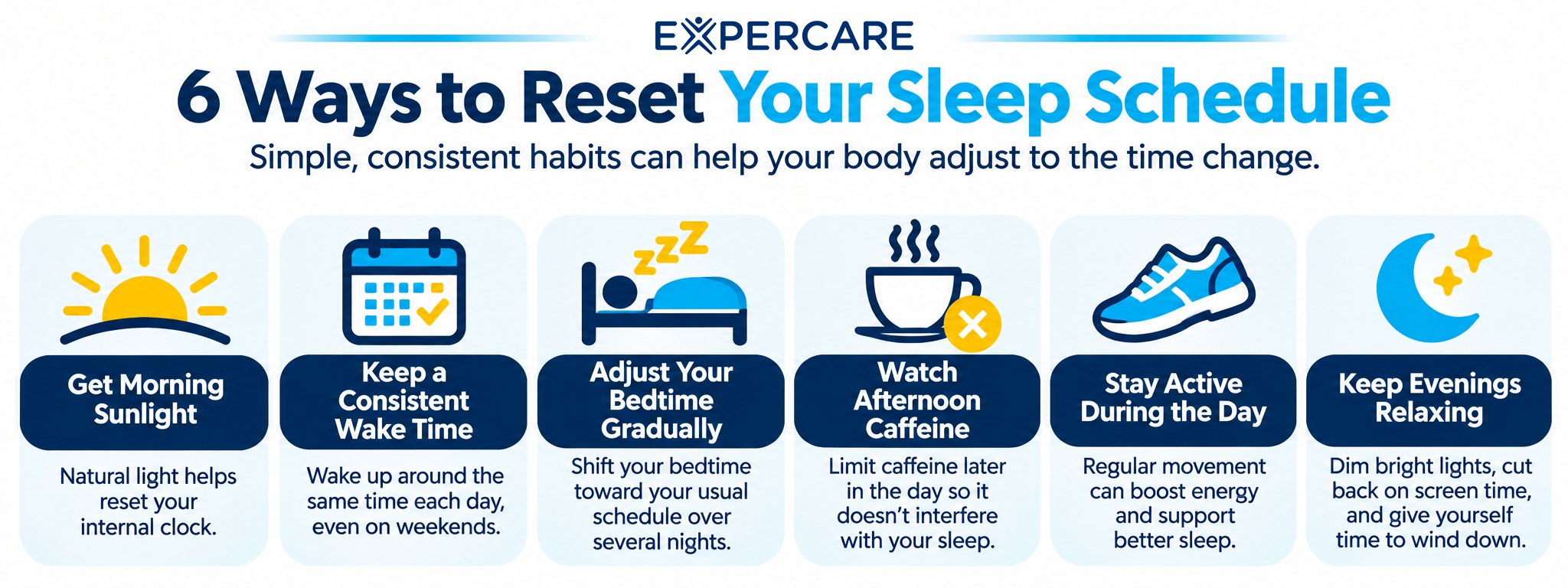
1. Get Outside for Morning Sunlight
Natural light is one of the strongest signals your brain uses to regulate its sleep-wake cycle. Try spending some time outdoors shortly after waking, even if it’s just a morning walk or drinking your coffee outside.
2. Keep Your Wake-Up Time Consistent
Waking up around the same time each day helps reinforce a predictable schedule. Try to keep your wake-up time consistent during the week and on weekends, even if you’re tempted to sleep in.
3. Adjust Your Bedtime Gradually
If you’re getting sleepy earlier than usual, you don’t have to force yourself to stay awake for another hour immediately. Gradually shift your bedtime toward your preferred schedule over several evenings while maintaining adequate sleep.
4. Watch Afternoon Caffeine
That afternoon coffee might seem like the perfect solution to your energy slump. But caffeine can remain active in your system for hours and make it harder to fall asleep when bedtime arrives. Consider limiting caffeine later in the day, particularly if you’re having trouble sleeping.
5. Stay Active During the Day
Regular physical activity supports healthy sleep patterns and can help you feel more alert. A morning walk, an afternoon workout, or simply getting outside can make a difference.
6. Keep Evening Routines Relaxing
Dim bright lights as bedtime approaches, limit stimulating screen time, and give yourself an opportunity to wind down. If you’re having trouble sleeping, avoid relying on long afternoon naps that could make it harder to fall asleep at night.
The goal isn’t to force your body into a new schedule overnight. It’s to give it consistent signals that help it adjust naturally.
Can Daylight Saving Time Affect Your Mood?
Yes. Changes in sleep and daylight exposure can affect how you feel, including your energy, patience, and mood. Feeling more tired or irritable for a few days after the time change isn’t unusual. But there’s an important difference between temporary sleep disruption and a longer-lasting mood condition.
Daylight Saving Time vs. Seasonal Affective Disorder (SAD)
| Time Change Adjustment | Seasonal Affective Disorder | |
| Primary issue | Sudden shift in clock time | Seasonal pattern of depression |
| Duration | Usually days, sometimes longer | Often weeks or months |
| Common symptoms | Early waking, fatigue, temporary irritability | Persistent low mood, loss of interest, sleep or appetite changes |
| Typical approach | Consistent sleep habits and light exposure | Clinical evaluation and potentially treatment |
| When to seek help | Persistent or disruptive sleep problems | Persistent depression symptoms or concerning mood changes |
Seasonal Affective Disorder is a form of depression associated with a recurring seasonal pattern. It is not simply another name for feeling tired after the clocks change. If your mood remains low, you lose interest in activities you normally enjoy, or symptoms begin interfering with daily life, a healthcare professional can help determine what’s going on.
Related reading: ExperCARE’s guide to Seasonal Affective Disorder.
Who May Have a Harder Time Adjusting to the Time Change?
Some people may notice the clock change more than others, particularly those whose sleep schedules are already difficult to maintain. This can include:
- Young children: Bedtimes, naps, and early waking can become challenging.
- Teenagers: Naturally later sleep schedules may make consistent routines more difficult.
- Shift workers: Changing work hours and light exposure can complicate sleep patterns.
- Older adults: Changes in sleep patterns or early waking may make adjustments more noticeable.
- People with existing sleep disorders: A clock change can add another disruption to an already difficult sleep routine.
For families with young children, maintaining predictable meals, naps, and bedtime routines may help ease the transition. And if your dog is still demanding breakfast at the old time, you’re certainly not alone.
When Should You See a Doctor About Sleep Problems?
Occasional grogginess after the time change is usually not a reason for concern. However, sleep difficulties shouldn’t automatically be blamed on daylight saving time. Consider speaking with a healthcare professional if you experience:
- Sleep problems that continue beyond a couple of weeks
- Persistent difficulty falling asleep or staying asleep
- Daytime sleepiness that interferes with work or daily activities
- Loud snoring, gasping, or pauses in breathing during sleep
- Ongoing changes in mood, energy, or interest in normal activities
Excessive sleepiness that makes driving or other activities unsafe deserves prompt attention. Persistent sleep problems can have several possible causes, including insomnia, sleep apnea, medication effects, and mood conditions.
ExperCARE’s primary care team can help evaluate ongoing sleep concerns, discuss possible causes, and determine whether additional testing or specialized care may be appropriate.
Frequently Asked Questions About Daylight Saving Time and Sleep
Why am I waking up so early after daylight saving time ends?
Your body’s internal clock may still be following your previous sleep schedule. When the clocks fall back an hour, your usual wake-up time can suddenly appear an hour earlier. Consistent wake times and morning light can help you adjust.
Why do I feel tired earlier after the time change?
Your body may still be following its previous bedtime, and darkness arriving earlier on the clock may contribute to feeling sleepy sooner. This usually improves as your daily schedule becomes more consistent.
How long does it take kids to adjust to daylight saving time?
Some children adjust within several days, while others need more time. Maintaining consistent nap times, meals, and bedtime routines can help make the transition easier.
Can daylight saving time cause insomnia?
The time change can temporarily disrupt sleep, including making it harder to fall asleep or stay asleep. However, persistent insomnia may have other causes and should not automatically be attributed to the clock change.
Does the time change affect your mood?
It can. Changes in sleep and exposure to daylight may contribute to temporary irritability, fatigue, or changes in mood. Persistent depressive symptoms deserve medical attention.
What’s the best way to reset your body clock?
Get natural light in the morning, maintain a consistent wake-up time, stay physically active, and keep a relaxing bedtime routine. Regular habits help your circadian rhythm adjust to the new schedule.
Key Takeaways
- Daylight saving time can temporarily disrupt your body’s internal sleep-wake cycle.
- Many people adjust within a few days, although some need longer.
- Morning sunlight and consistent sleep routines can help.
- The temporary effects of a clock change are different from Seasonal Affective Disorder.
- Persistent sleep difficulties or concerning mood changes deserve medical attention.
The Bottom LineGaining an hour sounds like a bonus, but your body doesn’t always see it that way. Daylight saving time can temporarily disrupt your sleep, energy, and mood, even when the clocks move backward. Fortunately, many people adjust within several days with a little morning sunlight, consistent routines, and time. If sleep problems continue or begin affecting your everyday life, don’t assume it’s just the time change. Feeling off shouldn’t have to become your new normal. ExperCARE offers convenient primary care to help you get answers and take the next step toward feeling better.
|