How to Exercise Safely in Summer Heat
Medically reviewed by Christopher McGee, MD | Last Reviewed 7/1/26
How to Exercise Safely in Summer Heat
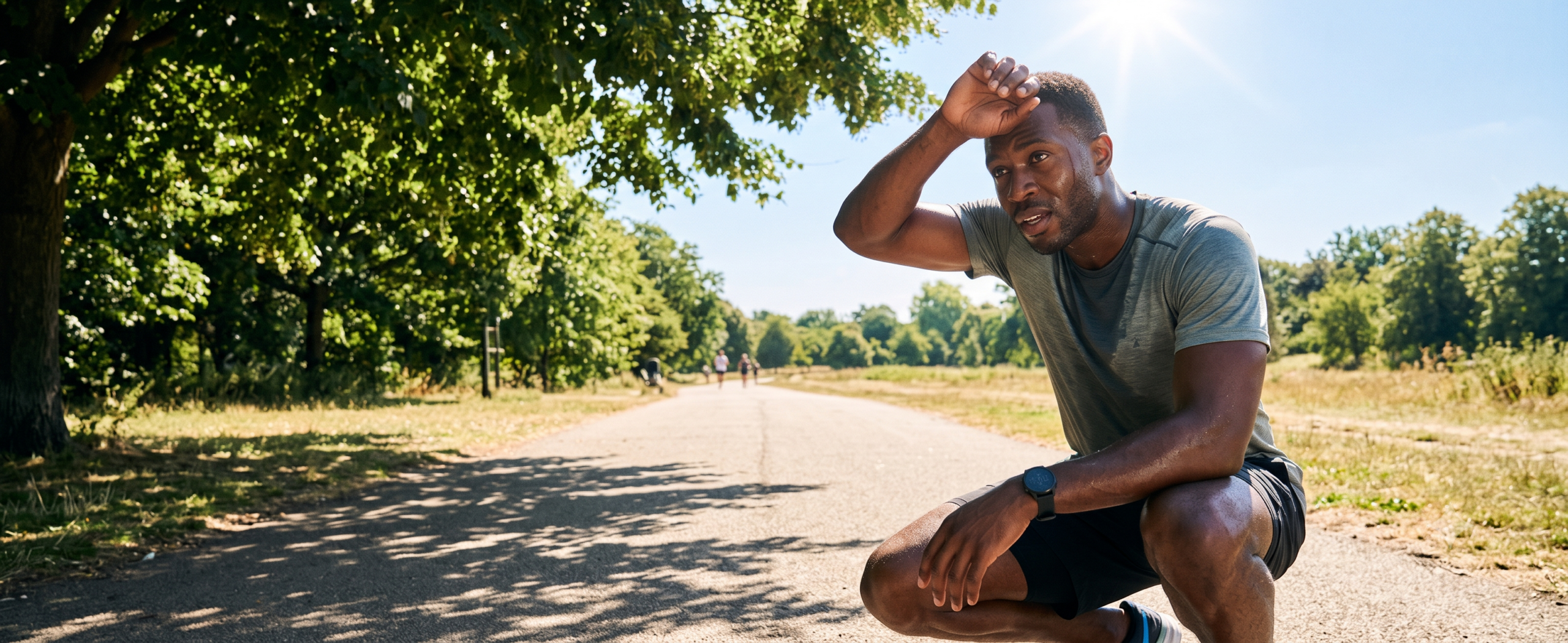
Summer doesn’t have to mean moving your workout inside. But exercising in the heat requires smart adjustments — and knowing when your body is telling you to stop.
Heat doesn’t just make exercise harder — it changes the physiological demands on your body in ways that can turn dangerous quickly. According to the CDC, exertional heat stroke — the type that occurs during physical activity — is one of the most serious heat-related illnesses, with body temperature rising to 106°F or higher within minutes. It can cause permanent disability or death without immediate treatment.
The good news: with the right timing, hydration, and awareness, most people can train outdoors all summer safely. Here’s how.
Why Heat Makes Exercise More Dangerous
During exercise, your muscles generate heat as a byproduct. Your body cools itself by moving blood toward the skin and sweating. In hot, humid weather, both mechanisms are less effective — sweat evaporates more slowly, and your cardiovascular system is already working harder. Body temperature rises faster. The margin for error shrinks.
Key risk factors during hot-weather exercise:
- High humidity — reduces sweat evaporation and effective cooling
- Exercising during peak heat hours — typically 10am to 4pm
- Being new to heat exercise or returning after a break — your body needs time to adapt
- Certain medications — diuretics, beta-blockers, and antihistamines affect sweating and heart rate
- Pre-existing conditions — heart disease, diabetes, and obesity increase risk
The Best Times of Day to Work Out in Summer
Timing is the single most effective strategy for safe summer exercise. The heat index peaks between 10am and 4pm — avoid high-intensity outdoor workouts during these hours when possible.
- Early morning (before 8am) — coolest temperatures, lower humidity in most climates, lower UV index
- Evening (after 6–7pm) — temperatures begin dropping after peak sun, though humidity may remain high
Always check the heat index, not just the air temperature. A 90°F day at 70% humidity feels dramatically more dangerous than the thermometer suggests. Most weather apps display the heat index alongside temperature.
Is It Safe to Run Outside in 90-Degree Heat?
Running in 90°F heat is possible for acclimatized athletes using the right precautions — but it requires real modifications. At 90°F with high humidity, the heat index often exceeds 100°F, substantially increasing exertional heat illness risk.
If you run in 90-degree heat:
- Slow your pace significantly — don’t try to match your normal pace in extreme heat
- Shorten your route or duration — cut usual workout by 20–30% until fully acclimatized
- Plan your route around water sources or carry enough fluid
- Run in shade when available
If the heat index reaches 103°F or above, strongly consider moving the workout indoors. The risk-to-benefit ratio tips against outdoor exertion for most people at that level.
Hydration Rules for Hot-Weather Exercise
Dehydration accelerates heat illness — and thirst is a late indicator. By the time you feel thirsty during a hot workout, you may already be behind.
- Before: Drink 16–20 oz of water 1–2 hours before your workout
- During: Drink 6–12 oz every 15–20 minutes during exercise
- After: Drink 16–24 oz for every pound lost during exercise
For workouts lasting more than 60 minutes in the heat, plain water may not be enough. Add an electrolyte drink to replace the sodium and potassium lost through heavy sweating. Avoid alcohol and caffeine before and during hot-weather exercise — both increase fluid loss.
Signs Your Body Is Overheating During Exercise — and What to Do
Exertional heat illness — the type triggered by exercise — can escalate faster than heat illness from passive exposure. Knowing the difference between heat exhaustion and exertional heat stroke during a workout could save your life or someone else’s.
Heat Exhaustion vs. Heat Stroke
| Sign | Heat Exhaustion (Exercise) | Exertional Heat Stroke | Action |
| Body temperature | Elevated, below 104°F | Rising to 106°F+ rapidly | Heat stroke: 911 immediately |
| Sweating | Heavy — cooling system working | May stop despite intense heat | Sweating stops = danger signal |
| Mental status | Alert — weak, dizzy, nauseous | Confused, slurred speech, unresponsive | Any confusion = call 911 now |
| Skin | Cool, pale, clammy | Hot — may be dry after sweating stops | Hot dry skin = call 911 |
| Nausea/headache | Common | Possible alongside confusion | Stop exercise, move to cool area |
| Correct response | Stop, cool down, fluids — urgent care if not improving | Call 911, begin cooling immediately | Do not wait — heat stroke is fatal without fast treatment |
Based on CDC NIOSH guidance for exertional heat-related illness.
The most important signal: if someone who was sweating heavily stops sweating and becomes confused during exercise, that is exertional heat stroke. Call 911 and begin cooling immediately — cold compresses to the head, neck, and armpits — while waiting for emergency services.
How to Acclimate to Exercising in the Heat
Acclimatization is the most effective way to reduce heat illness risk for regular outdoor exercisers. The body makes significant adaptations over 10–14 days of consistent heat exposure: earlier onset of sweating, increased plasma volume, and lower heart rate for the same workload.
- Start with 20–30 minutes at easy effort outdoors — gradually increase duration and intensity over two weeks
- Expect reduced performance during the adjustment period — don’t fight it
- Even fit athletes need to re-acclimate after time in cooler climates, illness, or extended rest
Tips for Safe Outdoor Workouts in Summer
- Wear light-colored, moisture-wicking clothing — dark colors absorb more heat; cotton retains sweat
- Apply SPF 30+ sunscreen before heading out — sunburn impairs the skin’s ability to cool itself
- Wear a hat and sunglasses — reduce direct sun exposure on your head and face
- Exercise with a partner when possible — someone else can recognize overheating before you do
- Know where to get to shade or air conditioning quickly if you need to stop
- Listen to your body — if something feels wrong, stop. No workout goal is worth a heat illness
Related Reading
Exercising safely is only one part of staying healthy during the summer. Children are especially vulnerable to heat-related illnesses because their bodies don’t regulate temperature as efficiently as adults. Learn how to recognize the early warning signs of heat exhaustion in kids and when it’s time to seek medical care.
→ Read: Signs of Heat Exhaustion in Children
Frequently Asked Questions
Is it safe to run outside in 90-degree heat?
It can be for acclimatized runners who modify their effort — slower pace, shorter distance, and early morning or evening timing. If the heat index exceeds 103°F, move indoors. Beginners and unacclimatized athletes should reduce intensity significantly and build up gradually over 10–14 days of exposure.
How much water should I drink when exercising in summer?
Drink 16–20 oz 1–2 hours before exercise, 6–12 oz every 15–20 minutes during, and 16–24 oz per pound lost afterward. For sessions over 60 minutes in the heat, add an electrolyte drink to replace sodium and potassium. Don’t rely on thirst — it’s a late indicator of dehydration.
What is exertional heat stroke?
Exertional heat stroke occurs when intense physical activity in heat overwhelms the body’s cooling system. According to the CDC, body temperature can rise to 106°F or higher within minutes, and without emergency treatment it can cause permanent disability or death. The key warning sign during exercise: a person who was sweating heavily suddenly stops sweating and becomes confused or unresponsive. Call 911 immediately.
How do I acclimate to exercising in the heat?
Start with short, easy-effort outdoor workouts and gradually increase duration and intensity over 10–14 days. Your body will adapt by sweating earlier, sweating more efficiently, and maintaining a lower heart rate for the same effort. Even highly fit athletes need this adjustment period when temperatures rise or after returning from a cooler climate.
What should I wear when working out in hot weather?
Light-colored, loose-fitting, moisture-wicking fabrics are best. Avoid cotton, which holds sweat against the skin. Add a wide-brimmed hat and sunglasses, and apply SPF 30+ sunscreen before going out — sunburn directly impairs your skin’s ability to cool itself during exercise.
When should I go to urgent care after exercising in the heat?
Seek urgent care if heat exhaustion symptoms — weakness, nausea, dizziness, heavy sweating — don’t improve within 30 minutes of rest, cooling, and fluids, or if you can’t keep fluids down. Call 911 immediately if anyone becomes confused, loses consciousness, or develops hot, dry skin after sweating stops — those are signs of exertional heat stroke, a medical emergency.
Bottom Line
Summer heat is manageable with the right approach — timing, hydration, and knowing your limits. The warning signs of overheating during exercise escalate faster than most people expect, especially in beginners and anyone who isn’t yet acclimatized.
Know the difference between pushing through discomfort and ignoring a warning signal. If something feels wrong, stop. And if symptoms don’t resolve quickly, come see us.
| Worried After a Hot-Weather Workout?
If you or someone you’re with is showing signs of heat exhaustion that aren’t improving, ExperCARE offers walk-in urgent care with no appointment needed. We can evaluate symptoms, check hydration, and provide IV fluids when appropriate. Find Your Nearest ExperCARE Urgent Care Location – Walk In Today |

